


Interviews and Reviews
KwaZulu Natal Province is a premier filming destination of choice in South Africa boasting a number of big productions in the world.
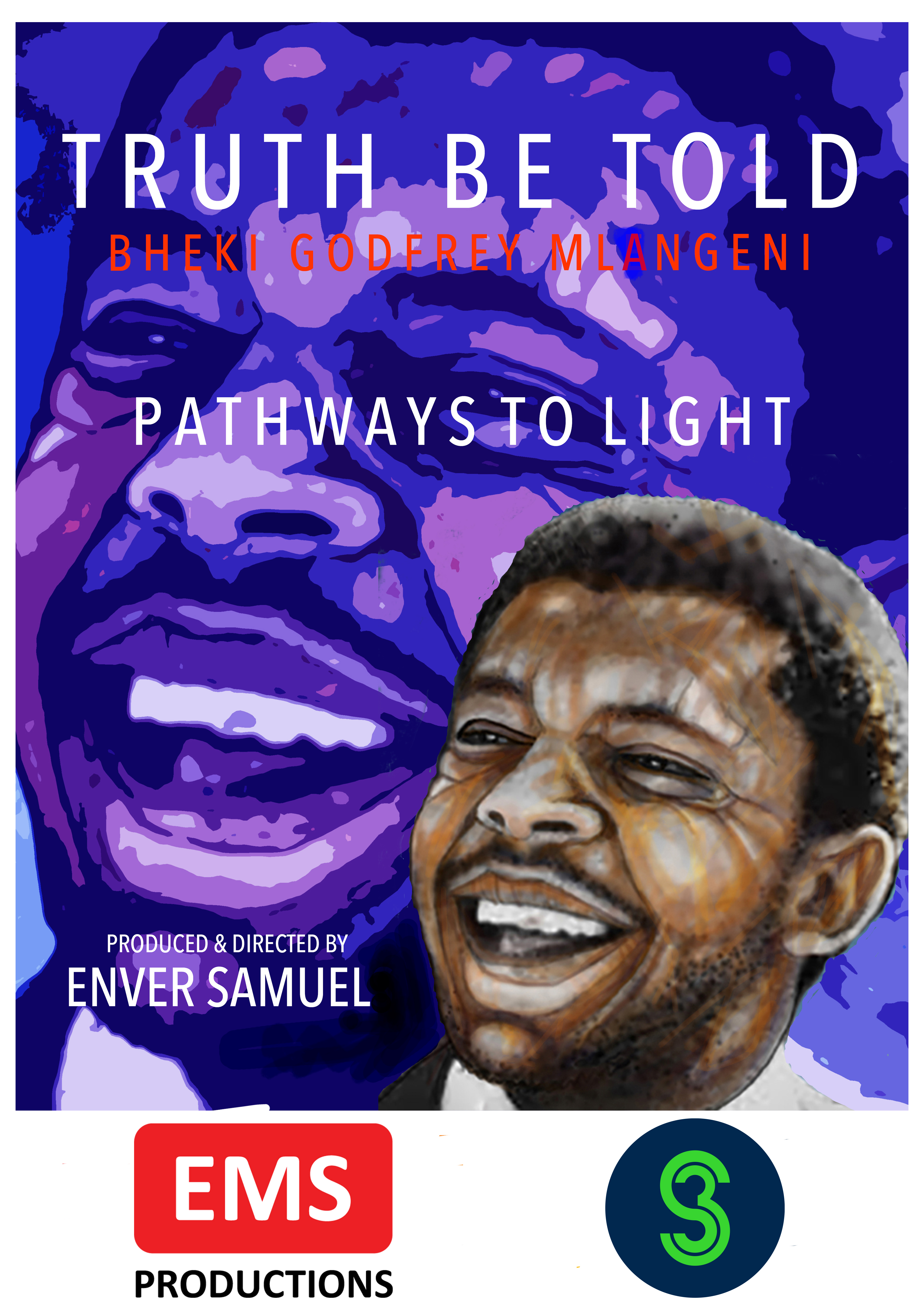
In honouring 30 years of democracy in South Africa we reflect back through stories shot in KZN. We are engaging on the KZN Film funded Episode of the “Truth Be Told’ documentaries, Phila Portia Ndwandwe,The Breastfeeding Warrior episode will be premiering at Nelson Mandela Foundation in Johannesburg, and will be showing on SABC 3 on 4 March.
For more on this, Peter Ndoro spoke to Film Producer Enver Samuels.

Chanel Africa
Nadia Romanos speaks to Enver Samuel, the director of ‘Truth Be Told’, a new local documentary series that looks at family members of victims of the Apartheid System. The series was inspired by the formation of the Truth and Reconciliation Commission, which was formed in 1995 to help deal with the atrocities of the apartheid era and bring about reconciliation through telling the truth about the past.
It will be broadcast on S3 (SABC 3) on Mondays at 9pm, starting from 4 March 2024.

5fm
South Africa is getting ready for the provincial and national elections and a year that marks 30 years of our democracy.
To commemorate this, Truth Be Told will be aired on SABC 3 at 9pm.
This show will unveil the heartfelt emotions and stories of people who lost loved ones at the hands of the old regime.

Drum
Here’s this week’s segment of the African Arty Beats with Channel Africa reporter Nhlanhla Mahlangu…

Africa Rise and Shine
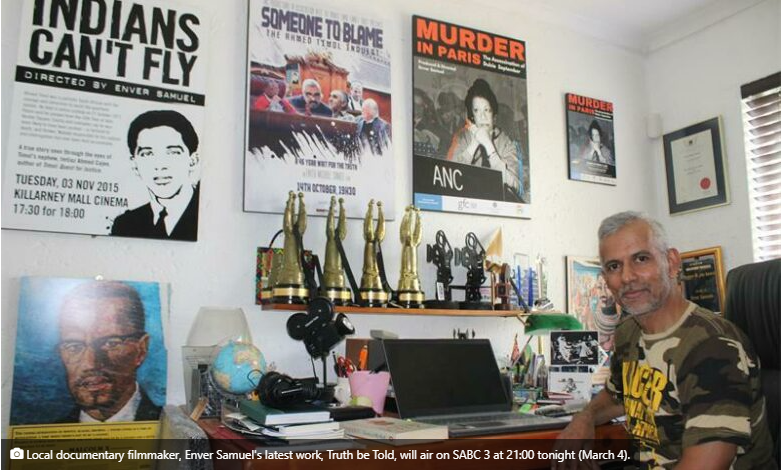
Local documentary filmmaker Enver Samuel has made quite a name for himself working in various behind-the-scenes roles on some of the country’s favourite talk shows, magazine progammes, entertainment, and reality television shows.
However, he has always felt the need to produce content that is thoughtful, impactful, and that makes a real difference.
Seven years ago, after many years in the industry and with many accolades to his name, Enver decided that it was time to do that which he has always yearned to do.
Roodeport Record
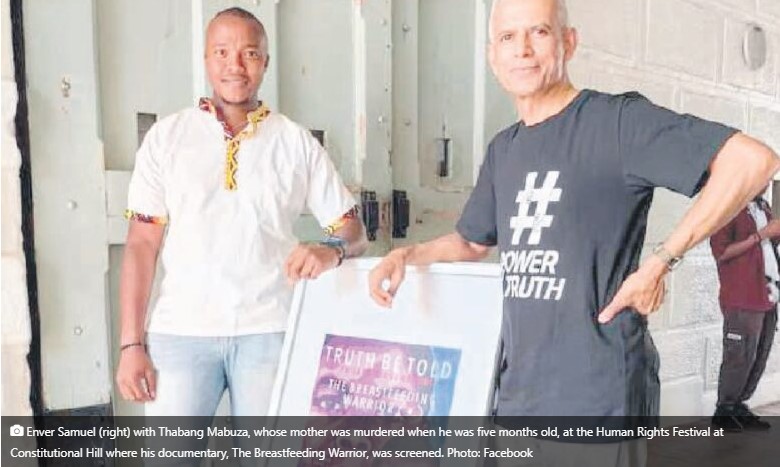
Foundation for Human Rights and the Nelson Mandela Foundation have come together to create a documentary series titled ‘Truth be Told’ which looks into the 1996 Truth and Reconciliation Commission. Director Enver Samuels and actor Thabang Mabuza have more.

Newzroom Afrika
Director and Producer of the Truth Be Told series Enver Samuel was interviewed on Expresso, Sabc3.

Expresso
Stages, pages, screens and more: Truth Be Told, a six-part documentary series that puts South Africa’s Truth and Reconciliation (TRC) process under the microscope.
Full Circle
Truth Be Told, is a six-part documentary series, critically examines the legacy of South Africa’s Truth and Reconciliation process. The powerful reality programme explores the impact of apartheid-era atrocities on individuals and families who suffered,as well as how the lack of prosecutions continues to affect the country today. The series uncovers the trauma and grief that still haunt those who survived or were left behind.
Morning Live
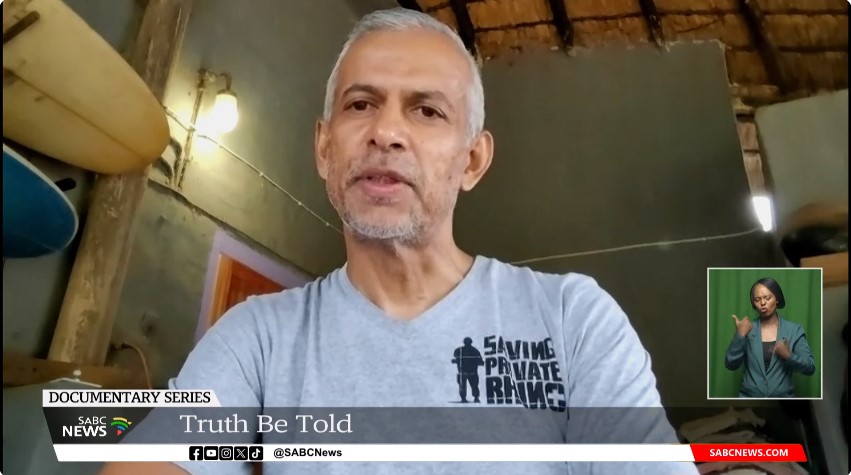
South Africa’s Truth and Reconciliation Commission (TRC) has been put under the spotlight in a new television series, Truth Be Told, created by award-winning filmmaker Enver Samuel.
The man behind the critically acclaimed Murder in Paris, which explored the assassination of anti-apartheid activist Dulcie September, spent hours searching for the gut-wrenching stories which feature in six individual documentary films.
They are among scores of cases that the TRC recommended for prosecution or investigation more than 20 years ago but which have yet to be finalised by the National Prosecuting Authority (NPA).
The Witness
STRUGGLE DOCCIES AN AWAKENING
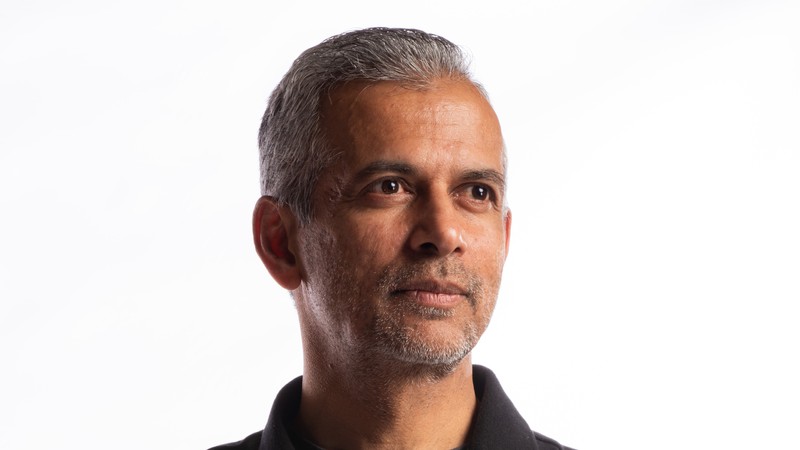
Durban — By telling stories of murdered anti-apartheid activists through the eyes of their children, an award-winning documentary filmmaker’s production depicts their pain, suffering and frustration at how the perpetrators got off the hook with little or no consequences.
The TRC and its legacy 30 years of Democracy by llan Lax
Introduction:
In the middle 1980s when I was a newly admitted young lawyer, the idea that
I might be standing here today, some 30 years after the advent of our new
democratic Republic with its remarkable and aspirational constitution, would
have seemed like a confused pipedream.
The TRC: and its unfinished business/legacy:
Many other societies like ours, have struggled with how to deal with the
legacy of human rights abuses and social inequalities in the aftermath of post
conflict transitions. South Africa was no different.
The political negotiations known as CODESA resulted in the 1993 interim
Constitution. This required Parliament (comprising of the elected
representatives of the people) to adopt a statute that, “in order to advance
reconciliation and reconstruction, would enable processes and frameworks
for the granting of amnesty and measures to transcend the divisions and
strife of the past, on the basis that there is a need for understanding but not
for vengeance, a need for reparation but not for retaliation, a need for ubuntu
but not for victimisation.”
The Truth and Reconciliation Commission (“TRC”) was the product of a
parliamentary process. The elected representatives of the people, debated
and set the mandate for the process, and what would happen with the
outcomes. As a creature of statute the TRC did not have a wide discretion
about this.
The TRC was established by the Promotion of National Unity and
Reconciliation Act No. 34 of 1995 (“the Act”) and came into operation in
December 1995. It comprised 17 Commissioners appointed through a very
public process (10 men, 7 women, 11 African and 6 non-African); with
Archbishop Tutu (Chair) and Dr Boraine (Deputy). Also 26 Committee
members to assist with the work of the three Committees:
- Human Rights Violations – forum for victims, investigate the big picture
and systemic abuses, make victim findings. - Reparations and Rehabilitation (R and R) – decide on urgent relief and
recommend compensation for those declared victims and other measures; - Amnesty – adjudicate applications (all lawyers, worked in panels (3 to 5)
chaired by a judge or acting judge).
At its largest, there were 438 staff spread across 4 regions: Eastern Cape,
Western/Northern Cape, KwaZulu-Natal/Free State and Gauteng/
Mpumalanga/North West/Limpopo, i.e. the old “Transvaal”.
Statistics: - 22 000 victim statements of which +/- 17000 were corroborated;
- 7,112 applications for amnesty received, involving approx. 30,000
violations; - 1 500 (21%) received amnesty either complete or in part;
- 5392 applications refused (insufficient evidence, incomplete,
unidentifiable parties or did not meet the legal requirements). - 19,050 people found to be victims of gross human rights violations. 2,975
victims were added through amnesty process. - 22,000+ people thus eligible to apply for reparations.
- A list of around 300 hundred cases were handed to the NPA for
prosecutions.
The TRC voiced its regret that there was very little overlap between people
seeking restitution and those seeking amnesty. The TRC produced a 7
Volume Report and made broad recommendations to Parliament for
decisions on implementation and prioritisation. Once again the
representatives of the people (i.e. applying the policy of their respective
political parties) decided on what to do with that legacy.
The TRC’s Recommendations:
These open with a request to the President to call a National Summit on
Reconciliation and notes the need for sensitivity to issues affecting women
and children.
E.G.: the prevention of future gross violations of human rights in the future:
requires the creation of a HR culture – closing the gap (the Gini coefficient),
job creation and economic justice, wealth tax, address racism, address
serious crime and corruption, promote the rule of law.
Accountability – Prosecutions; Reparations Healing and Rehabilitation
support for NGO’s working with victims as well as medical facilities, clinics
etc.; Government administration and organisation; Prisons; Faith
communities; Business ; Legal and judicial; Security forces; The health
sector; Media; and many more;
Looking back, I think it’s fair to say that while the TRC process was hardly
perfect, the failure to implement the recommendations cannot be laid at the
door of the TRC. Parliament and the Executive should be asked to explain
why these recommendations were not implemented. The people that should
answer for this are those elected representatives of the people were led by
the political parties.
The tarnishing of the TRC’s legacy and promise by successive governments
and by Parliament. This failure reflects a massive missed opportunity to
implement recommendations but more importantly to take seriously the
legacy of those who paid the ultimate price for our freedom.
Exhumations:
During TRC process 50 bodies were exhumed, out of around 250
disappeared/missing cases reported to TRC. Since the TRC the Missing
Persons Task Team in the NPA has exhumed another 170 individuals.
Accountability:
One of the fundamental premises of the TRC process was that there would
be a trade-off. On the one hand victims and perpetrators would receive an
opportunity to voluntarily tell their stories in return for acknowledgement and
the right to receive reparations on the one hand and the right to receive
amnesty on the other.
Thus society would be able to receive as complete a picture as possible i.e.
“an official knowing of what had happened and some idea of why”. It was a
clear carrot and stick scenario with the carrot being what I’ve already said and
the stick being prosecution for those who failed to apply for or who were
refuse amnesty. The failure to apply the stick of prosecution has denied
justice to the many victims who have waited decades. This also contributes to
a culture of impunity in RSA.
I would like to recognise and validate:
The bravery of the many people like Ntombi Khubeka and Phila Portia
Ndwandwe who were abducted or arrested, iterrogated and killed for not
cooperating the operatives of the old regime.
The shared experiences of so many victims and their families and especially
those who came forward to tell their stories, to contribute to the important
record the TRC was able to compile. These accounts however harrowing
offered many other people the opportunity to vicariously feel acknowledged
and recognised.
I cannot fail to mention the current circumstances of so many of these victims
as “people in need” but also people thirsting for some kind of justice and
closure. Victims’ groups have had enormous difficulties in accessing the
President Fund and it is a massive shame on all of us that there had been a
failure to set a practical policy framework for this.
30 years into our democracy we have yet to see any serious attempt at
meaningful prosecutions. Many of the perpetrators have died. Inexplicably,
the impression created, is that the state has waited for this to happen. Only
after extensive pressure has been brought by the victims’ families and their
supporters are inquests finally being held.
These documentaries do much to address this sorry state of neglect, which
not only tarnishes our legacy as an emerging democracy, but which is a slap
in the face for all those people who gave their lives and who have suffered in
so many ways in bringing South Africa to this point in our history. They do not
deserve to have had to wait so long for any kind of justice, recognition or
acknowledgement.
“Sunshine is the best disinfectant.”
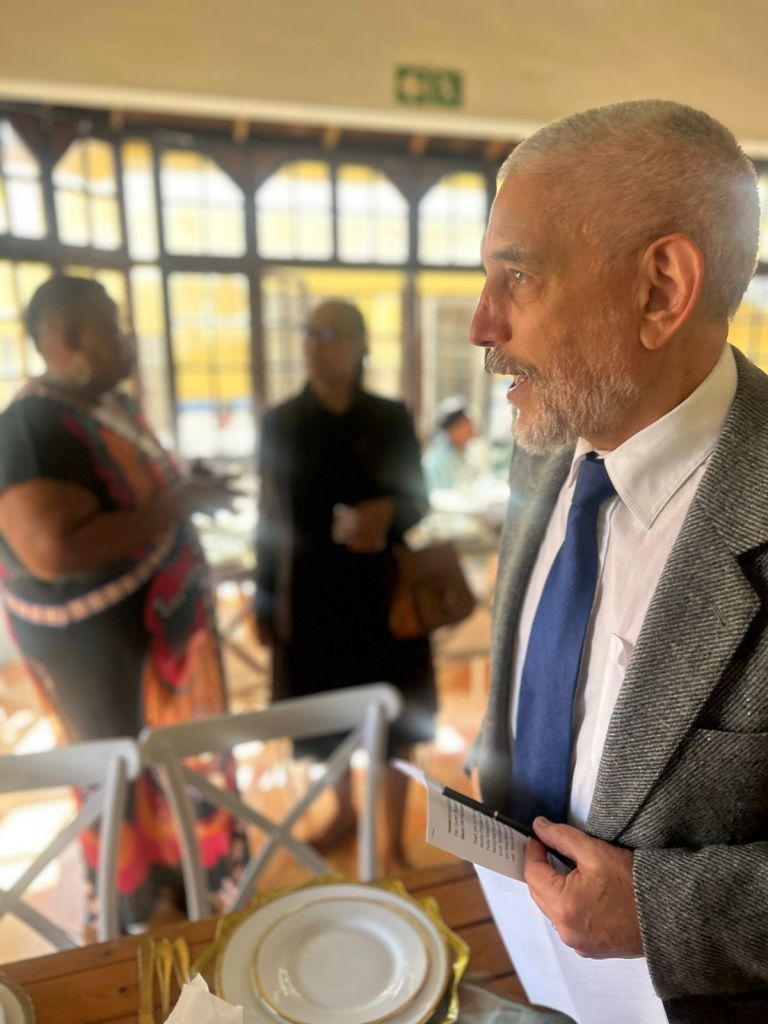


TRUTH BE TOLD: The Unfinished Business of the Truth and Reconciliation Commision is currently showing on the SABC Plus app which you can download freely

 TRUTH BE TOLD